


Electronics · A VIEOX perspective
Know what each inspection and test result can tell you.
Understand AOI, X-ray, in-circuit and functional testing through coverage, configuration, first-pass yield and a traceable rework history.
The practical question
How should electronics manufacturers combine inspection and testing without losing the meaning of a pass?
Assign each method to a defined coverage question, retain the product and test configuration, and preserve every attempt against the same unit identity. Optical inspection, X-ray, in-circuit testing and functional testing provide different evidence. Acceptance depends on the approved requirements and complete test plan, while first-pass yield and rework records explain how production reached the accepted result.
An electronic assembly can look correct and still fail an electrical check. It can also pass a repeated test while leaving an earlier failure unexplained. Useful production evidence connects each inspection and test with the question it answered, the configuration it used and the history of the individual unit.
Give electrical and functional tests different jobs
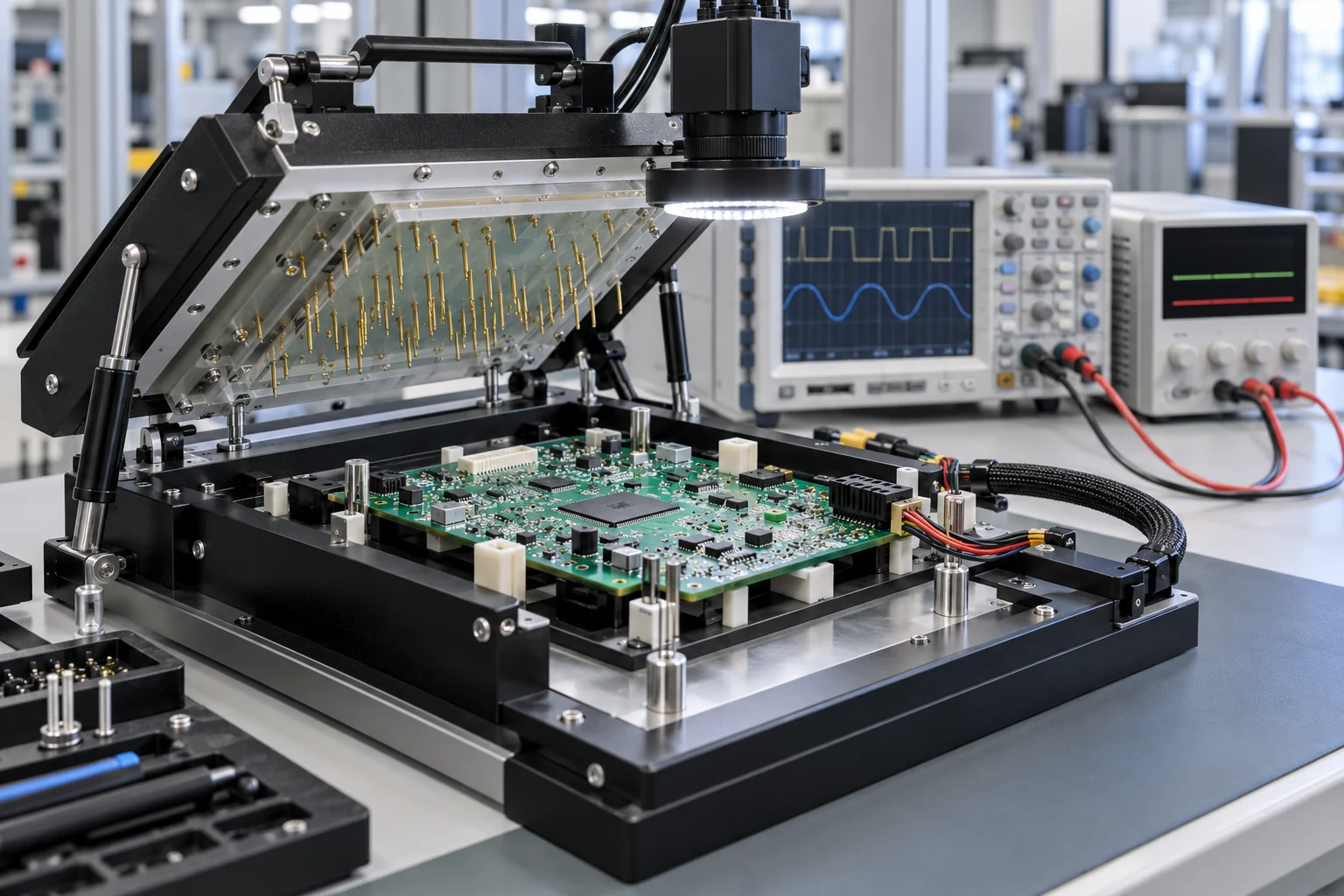
Keysight describes in-circuit testing (ICT) as a way to detect assembly issues such as shorts, opens and incorrect component values, while recognising limits caused by physical test access. Functional testing addresses behaviour under defined operating conditions. These methods complement inspection; they do not automatically cover every possible fault.
For each product, ask which requirement a test step verifies, which connection or stimulus it uses and which failure modes remain outside its coverage. A power-up check is not the same as exercising every interface or load condition. Keep an approved coverage map so a product revision triggers a deliberate review of the tests that depend on it.
Sources: [2]
Keep the test conditions beside the result
NI describes a functional test station as an integrated hardware and software system that measures a product against predefined specifications. This makes the station configuration part of the evidence behind a result, rather than background information kept only by the test developer.
Retain the unit serial number, hardware revision, firmware version, test sequence and limit-set revision, fixture identity and relevant instrument status. Record measured values and units where they support diagnosis, along with the pass or fail decision. When firmware is loaded during production, distinguish the version presented for test from the version verified at release. Keep approved changes traceable to the point where they took effect.
Sources: [3]
Preserve the first attempt when a unit returns
For a closed cohort at an agreed test stage, define first-pass yield as the proportion of entering units accepted on their first attempt without rework or another attempt. Reconcile pending units, aborted runs and invalid tests explicitly before comparing periods. Do not silently remove inconvenient records from the denominator.
Keep the first result even when the unit later passes. Report final accepted yield, repeat-test frequency and rework separately, using consistent unit identities. Otherwise a station can appear to improve simply because operators retry more often. A changed product mix, sequence or limit set also needs to remain visible when the team compares yield.
Explain what changed between attempts
Hypothetical example: controller boards fail one communication step on a test station, then pass on another. The team preserves both attempts and checks fixture identity, contact condition, firmware, sequence revision and the failed measurement. The second pass provides another observation; it does not by itself identify a fixture fault or clear the first failure.
A retest repeats an assessment; rework changes the assembly through an authorised operation. Keep any connector replacement, solder correction or firmware correction with its reason and subsequent verification. The responsible quality process determines disposition, including what evidence is needed when a failure cannot be reproduced. Passing eventually is not a diagnosis.
Connect the finding to the next useful investigation
Group recurring findings by product revision, defect location, test step and relevant period before assuming that one station is responsible. Compare those patterns with assembly history and recent setup changes. Ask whether the record supports a process issue, a test-system issue or an unresolved question requiring further evidence.
Assign the next check to someone who can evaluate it and record the expected decision. Review false calls and test-system health alongside confirmed product failures. VIEOX welcomes conversations about connecting these records so the production, engineering and quality teams can investigate the same unit history with a common starting point.
Put the question to work
A practical checklist
- Map each inspection and test to its coverage question.
- Preserve unit, firmware, fixture and programme identities.
- Keep measurements, limits and review decisions together.
- Define the first-pass yield cohort and counting rules.
- Retain every attempt and distinguish retest from rework.
- Give unresolved failures an owner and a disposition record.
Questions, answered
Can a functional pass replace all earlier inspections?
Only the approved coverage assessment can determine what is required. A particular functional sequence may not reveal an assembly condition that another method is intended to examine. Removing a check requires evaluating the affected requirements and evidence, not just observing a later pass.
Should a fixture problem count as a product defect?
Keep the observed failure and the confirmed classification separately. A verified fixture issue can be reported as test-system loss under documented rules, while the original attempt remains traceable. Avoid changing the classification merely because the unit passed after reconnection.
Does a high first-pass yield prove long-term reliability?
It describes performance at the defined production stage and conditions. Reliability over the intended service life requires evidence appropriate to the product and its environment. A production yield figure alone cannot establish that broader conclusion.