


Industry overview
Manufacturing: connect production, quality and equipment.
Explore manufacturing segments, equipment and processes, and how OT, machine connectivity and industrial analytics support production and quality.
The practical question
How can OT help a manufacturing operation work as a connected whole?
By monitoring and controlling physical processes, then connecting equipment signals with the product, job and people involved. This gives production, maintenance and quality teams a shared basis for action while preserving the responsibilities of each discipline.
Manufacturing turns materials and components into products through coordinated physical work. Its performance depends on material availability, process consistency, inspection, maintenance and shared utilities. OT connects these physical activities with the operating information that production, quality and engineering teams need to work together.
A diverse industry with different production models.
Manufacturing includes discrete production, where identifiable items pass through individual operations, and process production, where materials are transformed in batches or continuous flows. Factories may combine these models. An electronics plant assembles individual boards and devices; a materials business may process batches before forming, finishing and packing its output.
A useful overview also distinguishes product families: metalworking and machinery, vehicles and components, electrical and electronic equipment, plastics, textiles and consumer goods. For an OT discussion, identify which activities happen on the site, what enters and leaves them, and where another supplier or facility takes responsibility.
Sources: [1]
The equipment extends beyond the production line.
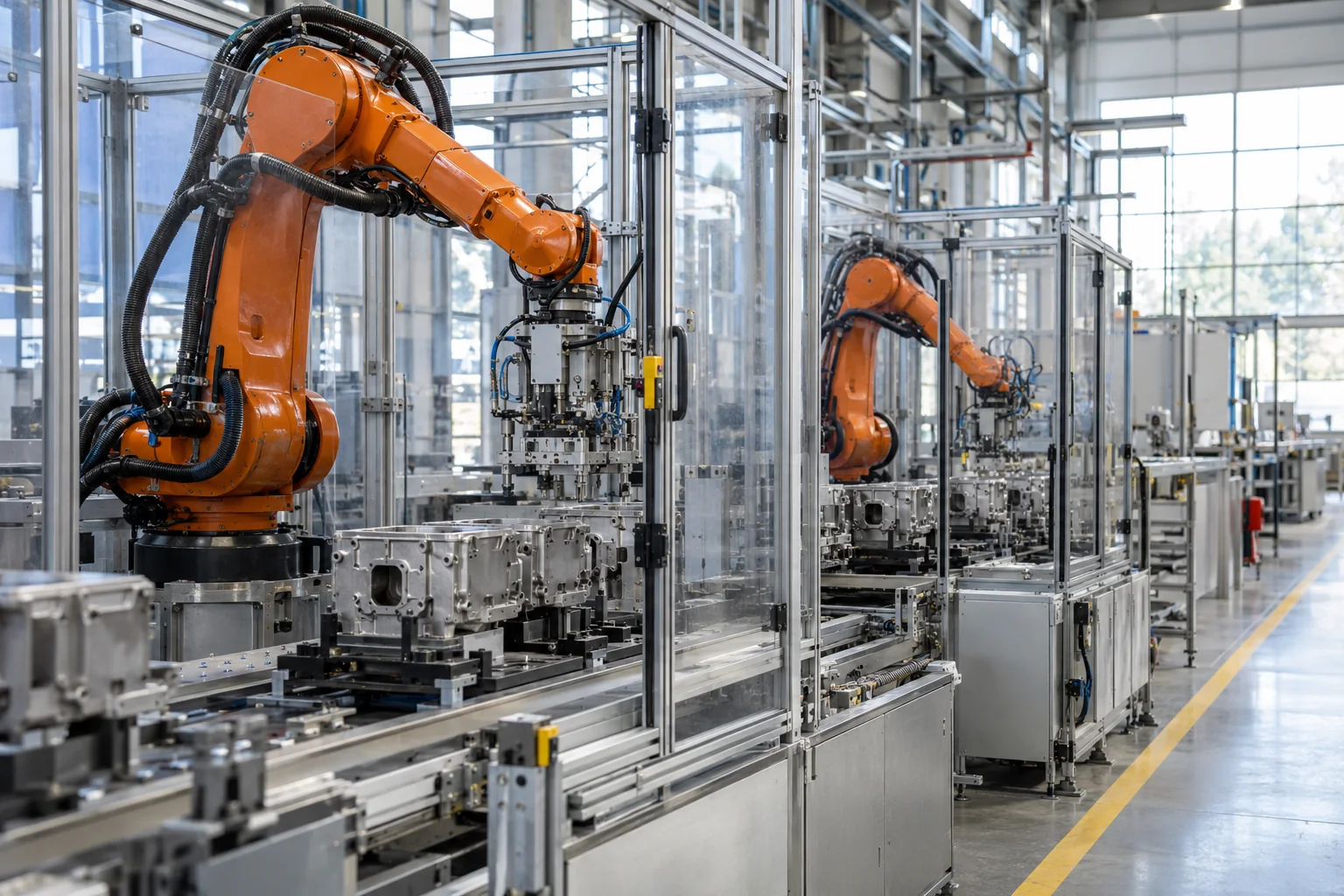
Depending on the product, the floor may contain machine tools, presses, moulding machines, welding cells, robots, assembly stations, conveyors and inspection instruments. Supporting systems include compressed air, pumps, heating, cooling and electrical distribution. These utilities deserve a place in the operating picture because production depends on their availability.
Create a simple equipment map covering transformation, movement, measurement and support. Show which assets serve one process and which are shared. A pressure reading at a utility source and a reading at the consuming machine describe different locations; both need an equipment identity and an understood purpose.
Follow the material from receipt to release.
A representative manufacturing route starts with receiving materials, preparing the job and setting up equipment. Processing or assembly is followed by inspection, any authorised rework, and release for packing or delivery. The exact sequence varies: some checks happen during production, and some products revisit earlier stages.
Use that route to connect records that otherwise remain separate. Identify the product revision, material lot, job, process step and operating period. Include planned changeovers and quality holds in the account of production. This creates a more useful explanation of output than treating every minute without a finished item as an equipment failure.
The challenges cross departmental boundaries.
Factories must balance delivery commitments with changing product mixes, variable material supply, equipment availability and consistent quality. A local improvement can move a queue elsewhere. Faster processing may have little value when inspection capacity, changeover preparation or a shared utility remains the constraint.
Technology introduces its own integration challenge. NIST highlights the need to match product requirements to process capabilities and to consider manufacturing safety, performance, quality and cost when applying new computing systems. The practical question is whether teams can trust and use the same operating picture, rather than simply collect more readings.
Sources: [2]
OT connects physical work with an appropriate response.
Operational technology includes the sensors, controllers and operator interfaces that observe or regulate machines and processes. At a wider level, equipment states, measurements and event histories can be combined with job and quality context to show where work is interrupted and which team should investigate.
An Industry 4.0 programme should connect production visibility, process consistency, utility use and equipment condition through agreed operating definitions. Start with machine connectivity and decide which manufacturing software views help each team act. Agree what a signal means, whether it is current and who responds. Keep operator observations available alongside automatic records. Any proposed control change needs the plant’s engineering assessment; an information view alone does not establish the correct operating action.
Sources: [1]
Start with a production journey people can explain.
Choose one product family or line and map its equipment, material handoffs, inspections and support systems. Bring production, maintenance, quality and facilities colleagues into the same discussion. Compare their account of a representative shift with the records that are already available.
Define a useful first outcome, such as explaining recurring delays or reducing the effort of preparing a quality review. Then assess what connections, definitions and responsibilities are missing. The Manufacturing Insights provide deeper discussions of production flow, equipment condition and Electronics, while this overview keeps the factory-wide relationships in view.
Put the question to work
A practical checklist
- Identify the production model and product family.
- Map process equipment and shared utilities.
- Connect equipment records to jobs, materials and process steps.
- Review delivery, maintenance, quality and energy questions together.
- Assign an owner and a practical response to each useful signal.
Questions, answered
Is manufacturing OT limited to fully automated factories?
No. A useful scope can include manual stations, existing controllers and operator observations. The connections should serve the process and the people who make decisions.
Does OT automatically explain poor output?
No. It can make operating evidence easier to compare. Teams still need to distinguish material waits, planned changes, equipment faults and quality decisions before choosing an action.