


Electronics · A VIEOX perspective
Keep the build history intact through every changeover.
Connect component lots, board serials, firmware and approved revisions so electronics manufacturing teams can investigate faults and manage high-mix changeovers.
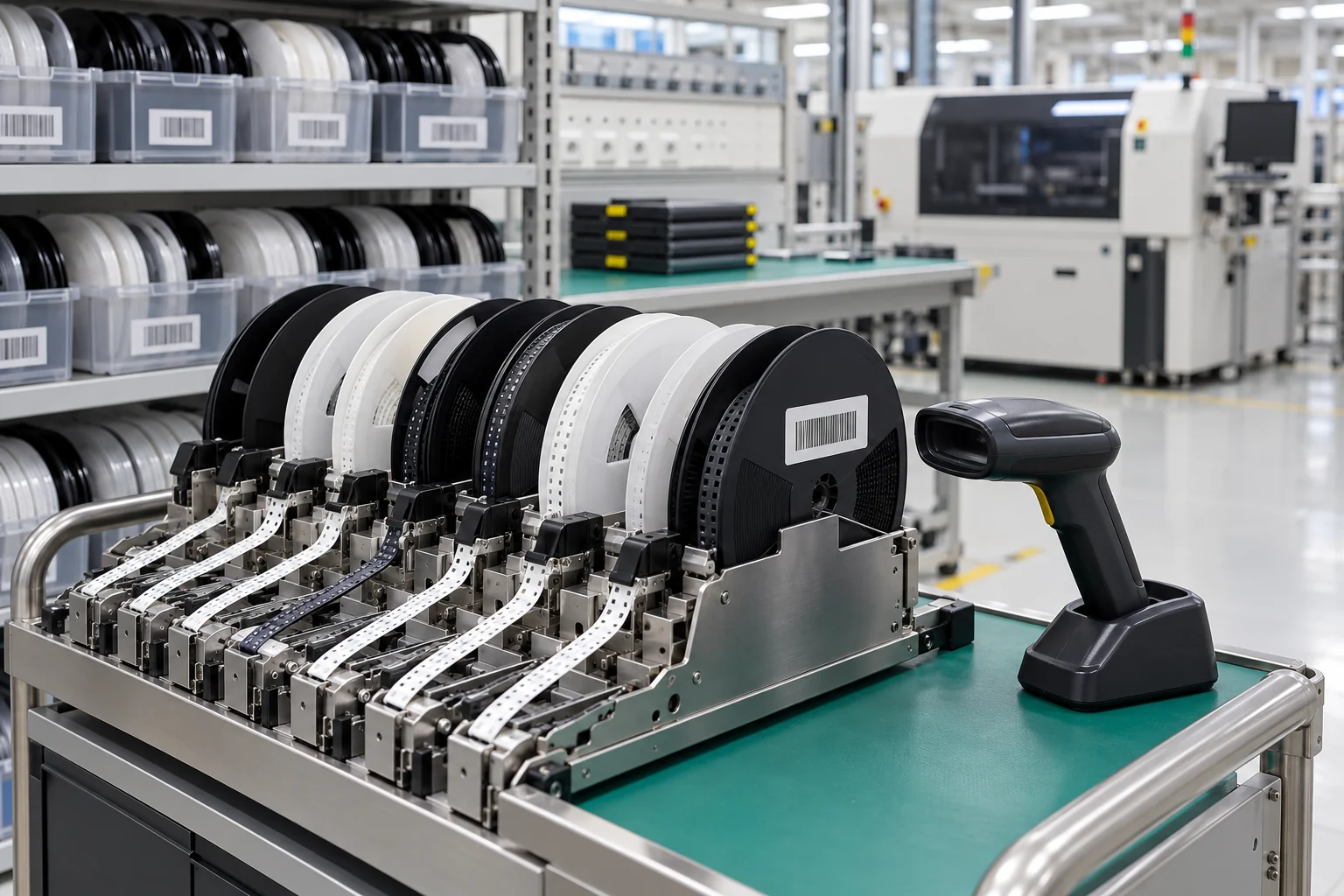
The practical question
What should an electronics manufacturer preserve when products, components and revisions change?
Preserve the relationship between each identified assembly, its actual materials and its authorised build configuration. Record changeovers, substitutions, programming, inspection and repair as events with clear ownership. Start with the investigation the team needs to support, then check that records survive material returns, rework and the next production order.
A modern electronic product carries more than a component list. Its history includes the board revision, material lots, programmed firmware, assembly conditions and repairs. Frequent changeovers make those relationships easy to lose. A useful traceability record lets the team reconstruct what was actually built and distinguish an approved variation from an unexplained difference.
Choose the traceability boundary before collecting records
IPC's public IPC-1782 scope excerpt describes traceability requirements in relation to perceived risk and agreement between user and supplier. It includes both materials and processes. This is useful framing; the applicable edition and contractual requirements still need to be established for the actual product.
Begin with a concrete question: if a suspect component lot is identified, which assemblies could contain it? Decide how incoming lots, internal reel identifiers, panel positions, board serials and finished equipment identities relate. Keep supplier lot references distinct from locally assigned container numbers. A label is useful only when its relationship to the physical material remains reliable.
Sources: [1]
Preserve the configuration used for this assembly
The current bill of materials (BOM) describes what should be built now. An investigation needs the revision authorised when a particular assembly was made, plus evidence of what was fitted. Connect the board identity with the released BOM revision, approved alternatives, work order, placement program, inspection program and applicable test specification.
Include the programmed firmware identifier and programming outcome where relevant. A familiar file name may conceal a different release, so use the controlled identifier established by engineering. If a panel becomes individual boards or a board enters a finished enclosure, preserve that relationship. Record a missing association explicitly instead of inferring it from a nearby timestamp.
Separate a planned changeover from an engineering change
For a high-mix line, the next order may require different feeders, tooling, programs and verification. Define the handover point: previous material cleared or identified, incoming material checked against the released configuration, and the required setup checks completed. Track replenishment and reel splices during the run as well as the initial setup.
A supply shortage adds a different decision. A proposed substitute needs the designated engineering approval and any required quality or customer review before use. Texas Instruments' product-change process illustrates the information a supplier notification can provide: affected products, expected effects and qualification evidence. Such information supports evaluation; it does not itself approve an alternative in the manufacturer's application. Record the authorised deviation, affected orders or serials, and expiry or review condition.
Sources: [2]
Carry handling history through material returns
The EOS/ESD Association explains that electrostatic discharge (ESD) protection extends to handling and transport, including packaging outside an electrostatic protected area. Texas Instruments directs users to package moisture-sensitivity information for usage instructions. These are different handling concerns; a traceability label does not establish that either has been controlled.
For the team's record, link applicable moisture exposure and storage history to the material when it returns from a partly completed order. Keep relevant ESD-control exceptions available for investigation. Follow the product-specific instructions and approved procedures; do not reset exposure history simply because a reel receives a new internal label.
Let repair add to the record
Hypothetical example: two controller variants share a board design but use different component options and firmware. A returned unit shows an intermittent communication fault. Its serial history identifies the fitted component lot, firmware release and a previous connector repair, giving the investigators specific evidence to compare with unaffected units.
The repair entry should preserve the reported symptom, inspection findings, removed and replacement material where required, authorised action and subsequent test result. Keep the earlier failure and test attempts visible. A successful retest records one outcome under stated conditions; it should not erase the reason the board entered repair or prove the cause of the original fault.
Check whether another team can reconstruct the build
Select one completed order and rehearse a trace in both directions: from a board serial back to its configuration and materials, then from a selected material lot forward to potentially affected assemblies. Include material returns, split reels, manual corrections and repaired boards. Note which connections are evidenced and which remain uncertain.
Agree who can correct records, how corrections remain visible and who decides containment or release when the history is incomplete. Set retention and access around product, customer and applicable obligations. A useful conversation with VIEOX can begin with this reconstruction exercise: which missing relationship prevents the responsible team from making a confident decision?
Put the question to work
A practical checklist
- Define lot, panel, board and finished-unit identities.
- Preserve the released configuration and actual material assignments.
- Record replenishment, changeover checks and approved substitutions.
- Carry relevant handling history through storage and returns.
- Retain repair actions and every relevant test attempt.
- Rehearse tracing in both directions with the responsible teams.
Questions, answered
Does every component need an individual serial number?
Choose the identification detail around risk, contractual requirements and the question being investigated. Lot-level records and individually identified assemblies may serve different purposes. Document the limits of the chosen approach rather than implying that every fitted component is individually traceable.
Can a barcode scan approve a component substitution?
A scan can check an identity against an existing authorised record. It cannot establish engineering suitability by itself. The approval, configuration update and any required qualification remain separate decisions with named responsibility.
Sources & further reading
- IPC — IPC-1782: Manufacturing and Supply Chain Traceability of Electronic Products, public scope excerpt (2016)
- Texas Instruments — Product change notification
- EOS/ESD Association — Fundamentals, Part 3: Basic ESD Control Procedures and Materials
- Texas Instruments — Quality, reliability and packaging FAQs: product shelf life