


Robotic welding · A closer look
Keep plasma-welding context as precise as the process.
Explore plasma arc welding with clear process identity, equipment history, sequence visibility and quality records that remain tied to the relevant joint.
The practical question
What context belongs around a plasma arc-welding observation?
Identify the joining process, equipment, joint, approved programme or setup and the relevant operation period. Keep the available equipment observations and maintenance history connected to that work. Relate them to the quality question without assuming that a stable-looking signal establishes weld acceptance.
A plasma-welding record should reflect the joining operation and the installed equipment. Using a generic label such as plasma can leave uncertainty about the process, the observations or even whether the record describes welding or cutting. Clear language is part of useful operational visibility.
Keep plasma welding and plasma cutting distinct
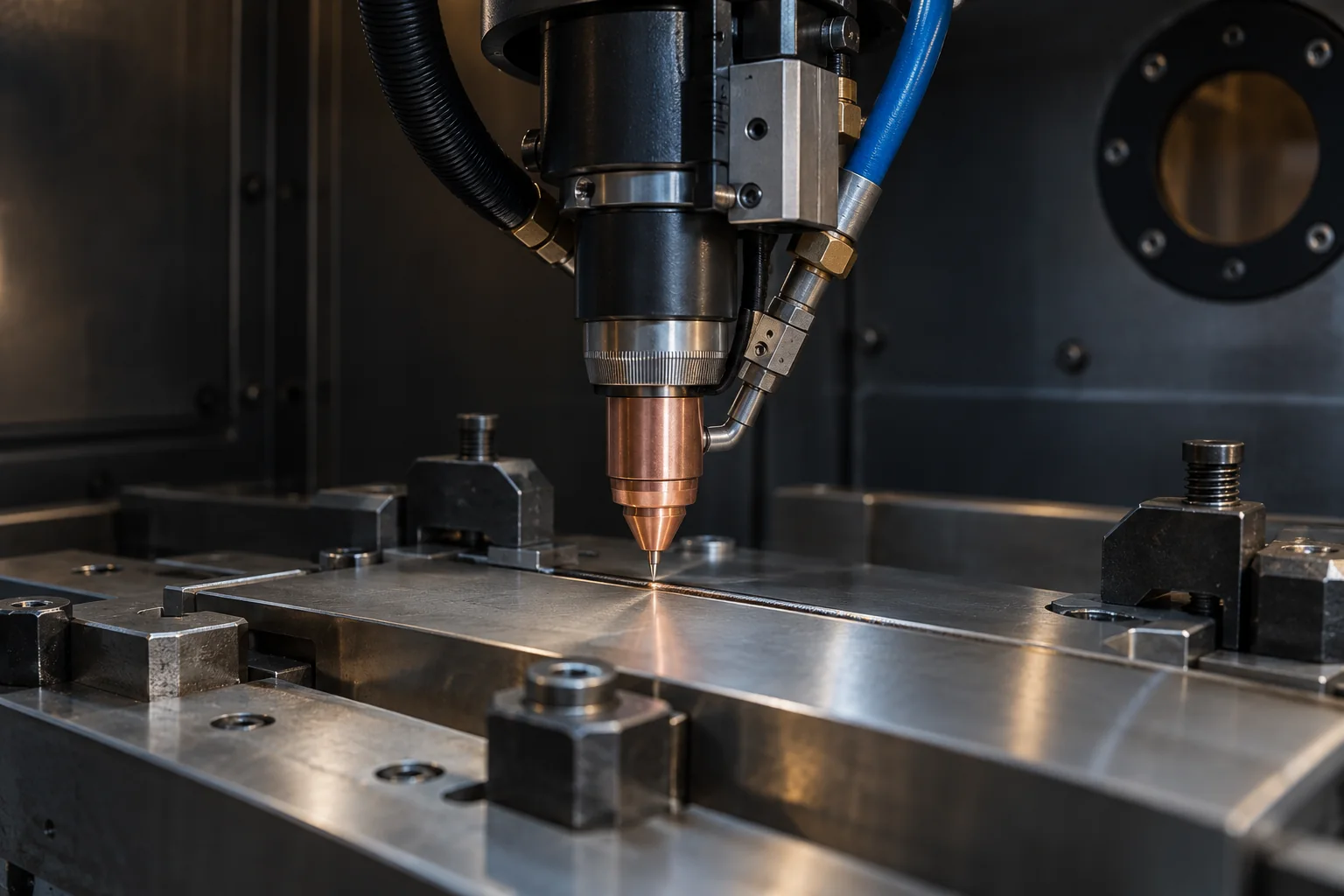
Plasma arc welding (PAW) uses a constricted arc for joining. TWI describes the electrode within the torch and the arc passing through a fine-bore nozzle, with plasma and shielding-gas arrangements. This series concerns welding; records from a plasma-cutting operation should be identified as a separate process.
Sources: [1]
Preserve the equipment arrangement
TWI’s equipment guidance explains that the torch, nozzle, power source and gas systems form part of the plasma-welding arrangement. Relevant equipment and service history should therefore remain accessible beside the recorded weld. The interpretation belongs to someone who understands the installed process and its qualified operating requirements.
Sources: [2]
Give the sequence a clear meaning
Ask what each available event represents: preparation, a programme stage, the joining operation, a pause or completion. A record can be accurate at its own level while being too broad for a particular joint investigation. Explain that level to the people using it.
When a cycle contains several operations, identify which portion belongs to the observation under review. Retain the approved setup and programme references, plus the time basis used by the equipment and inspection records. If a timestamp cannot place a service action before or after a concern, retain the uncertainty instead of forcing a tidy sequence.
An illustrative situation
A question after recorded torch service
Hypothetical example: a team notices a different pattern during a production period that also contains a torch-service entry. The first review locates the affected joints, setup references and inspection findings. It checks whether the maintenance timestamp represents the actual work or the later completion of paperwork.
The service entry becomes useful context without being labelled as the cause. The specialist can decide what comparison or examination is appropriate. The record preserves both the original process observation and the explanation eventually supported by the review.
Build around a question the team already has
Choose a recurring plasma-welding concern and ask the people investigating it where they lose time. Are they finding the wrong programme revision, searching for the relevant inspection or asking a colleague to reconstruct what happened during an interruption? Those gaps provide a concrete starting point.
VIEOX’s conversation can focus on making the available information easier to understand and connect. Agree which records can be used, who can interpret them and how the team will judge whether the clearer view helps. Process settings, qualification and permission to operate remain decisions for the responsible engineering and safety functions.
Put the question to work
A practical checklist
- Identify plasma arc welding explicitly in the equipment and operation record.
- Preserve the joint, setup, programme and recorded sequence.
- Keep relevant torch and equipment-service history accessible.
- Explain timing uncertainty and the scope of available observations.
- Link specialist findings and authorised follow-up back to the original question.
Questions, answered
Should plasma welding and other arc processes share identical fields?
They can share common identity and timing fields while retaining process-specific definitions. Let the welding team identify which observations matter for the installed arrangement. Avoid presenting similarly named measurements as equivalent without that review.
What if the only information available is a machine cycle record?
Use it at the scope it supports. It may help identify a production period, interruption or programme, even when it cannot resolve an individual weld. State the limitation and decide whether a more specific record would answer a real operating question.