


Six Sigma quality control · A closer look
Understand the measurement before judging the variation.
Explore measurement-system analysis, process variation, control versus specification limits and the context needed for a meaningful capability review.
The practical question
What should be checked before using industrial measurements for a quality study?
Confirm the characteristic, unit, measurement method, instrument and relevant sample or part identity. Establish whether the measurement arrangement is suitable for the question, and preserve changes that affect comparability. Then assess process behaviour using a method whose assumptions and interpretation are understood.
An observed difference can come from the process, the measurement arrangement or a mixture of both. A useful quality review therefore asks how the values were obtained before drawing a conclusion about the work. OT context can help keep those questions connected to the relevant production period.
Understand the measurement system
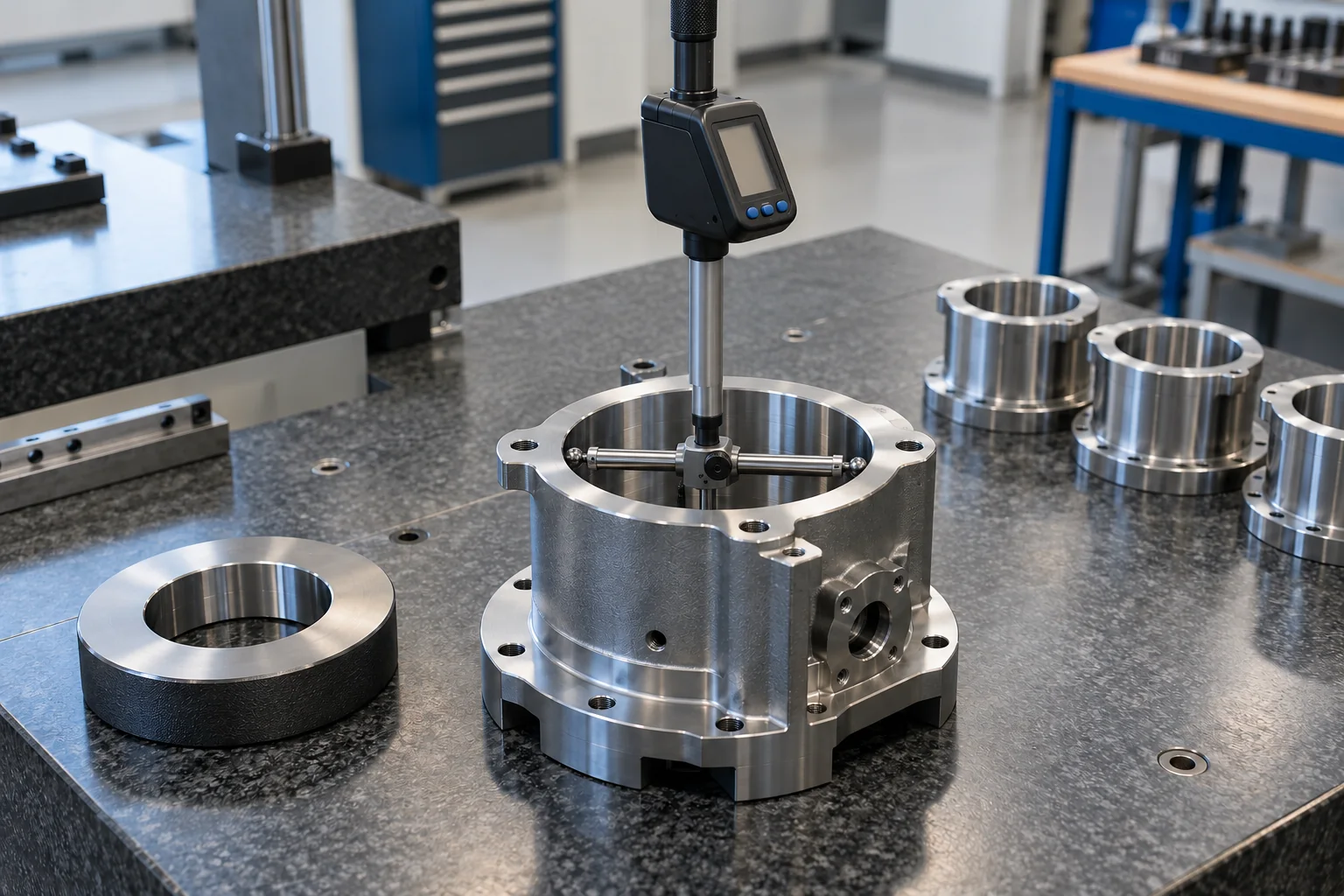
NIST’s gauge repeatability and reproducibility guidance examines errors associated with production measurement systems, including instruments, operators and study design. Measurement-system analysis asks how the measurement arrangement contributes to the observed variation. It is a separate question from whether the production process meets its requirement.
Sources: [1]
Separate control and specification limits
Statistical process control (SPC) uses control limits to examine process behaviour under a statistical model. Specification limits describe product requirements. A result can meet specification while the process pattern still warrants investigation.
Sources: [2]
Interpret capability with its assumptions
NIST’s capability guidance begins with an in-control process and explains assumptions behind common indices, including distribution and adequate data. State the method and the period it covers. A capability result should travel with its assumptions, rather than appearing as an unconditional property of the equipment.
Sources: [3]
Preserve the circumstances that make results comparable
Keep the measurement method, instrument reference and relevant configuration with the result. Identify whether the record concerns the same characteristic and unit across the selected period. Preserve changes in the requirement or measurement arrangement so the quality team can decide whether the observations belong in one study.
The operating context also matters: product identity, process route, equipment and production period can help a reviewer separate different populations of work. Avoid combining them simply because the columns have the same name. Where the sample cannot be confidently linked to production, show the gap and decide how it affects the conclusion.
An illustrative situation
Examine an apparent shift carefully
Hypothetical example: a dimensional trend appears to move after a shift change. The review identifies a change in measurement arrangement during the same period. The team checks the relevant measurement-system evidence and separates the records before deciding whether the production process itself changed.
The result may be a better-defined process question, a measurement question or a need for further evidence. None should be hidden to keep a chart looking simple. A conversation with VIEOX can focus on making those identities, changes and limitations easier for the quality team to see when it needs them.
Put the question to work
A practical checklist
- Identify the characteristic, unit, method and measurement arrangement.
- Keep measurement-system questions distinct from process-performance questions.
- Explain whether each limit describes process behaviour or a product requirement.
- Preserve changes and separate observations that are not comparable.
- Report capability with its method, scope and relevant assumptions.
Questions, answered
How should a team present an incomplete study?
State the work and period that the available evidence covers, identify the missing information and explain which conclusions remain open. Keep the responsible reviewer and next step visible. A useful partial study should not be presented as a complete assessment of the operation.
Does collecting more samples fix an unsuitable measurement system?
Additional observations do not remove an unresolved problem in how the values are obtained or interpreted. Establish the measurement arrangement’s suitability for the decision, then choose the study design and data collection with the responsible quality specialist.