


Special-purpose machines · The complete perspective
Make the logic of a special-purpose machine understandable.
Explore OT visibility for special-purpose machines: cycle sequences, waiting, retries, tooling condition, quality records and a clearer handover.
The practical question
What should an OT view reveal about a special-purpose machine?
It should explain the machine’s work in terms the operating team can recognise: the part or job, the relevant stage, the condition preventing progress and the result that follows. Connecting those records with tooling, maintenance and quality context helps the team investigate a concern without exposing or changing the machine’s control logic.
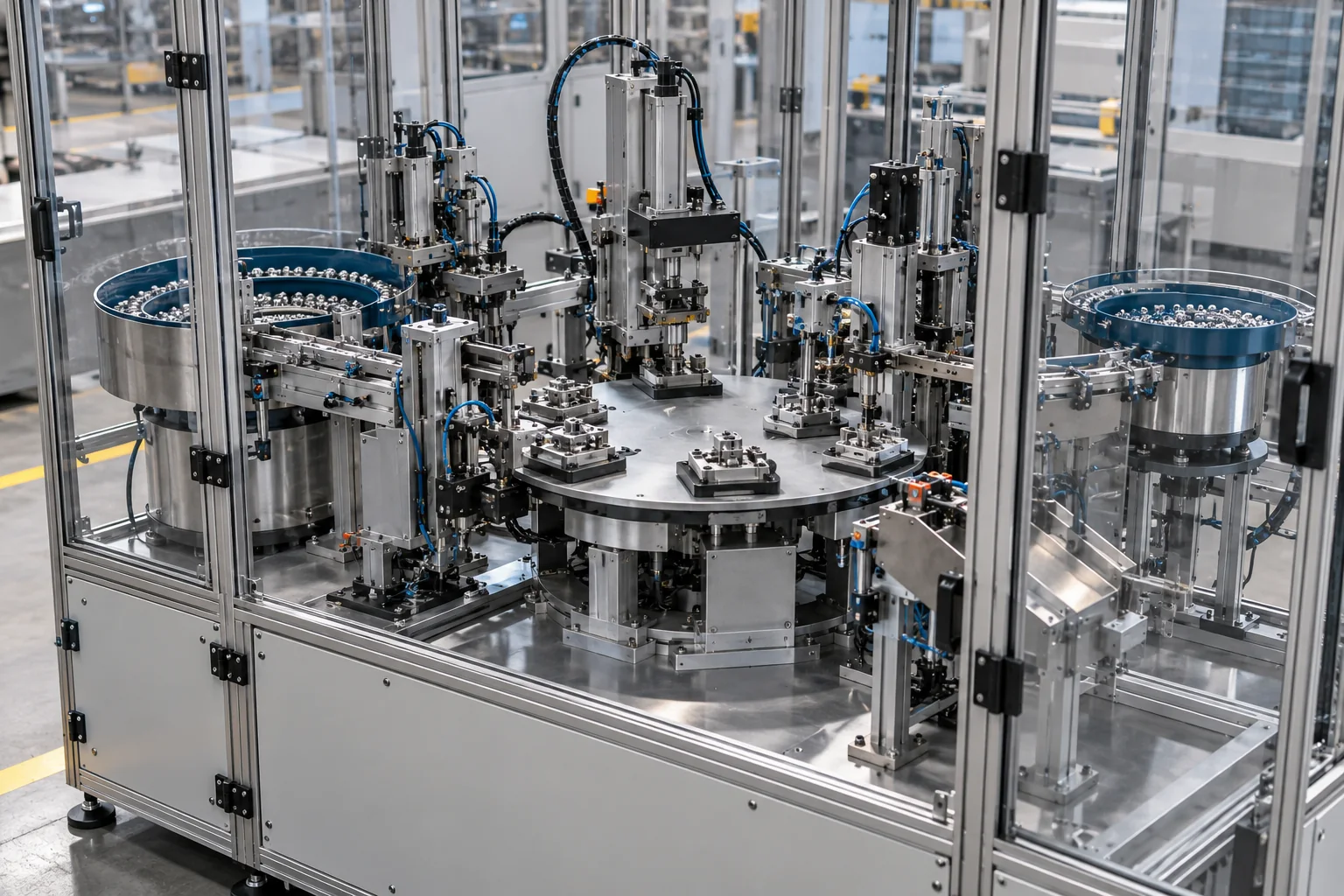
A special-purpose machine is built around a particular production task. Its usefulness to the factory depends on more than a machine-running indicator: people need to understand which part of the work is progressing, what is waiting and what a result actually means. That understanding should remain available after the commissioning team has left.
Begin with the task the machine performs
A special-purpose machine, often shortened to SPM, might serve a focused assembly, fastening, machining, testing or transfer operation. Start by asking the operating team to describe the intended work in plain language. Where does a part enter, what happens to it, what determines completion and where does it go next?
Then identify the questions that repeatedly bring people to the machine. A cycle that takes longer, an uncertain test result, a recurring retry or a difficult shift handover can each justify a different view. Choose one question before deciding which existing signals deserve to be collected or displayed.
Agree a readable vocabulary for machine state
PackML provides one established example of representing machine states consistently. It distinguishes states and transitions rather than reducing an entire machine to a single running value. An SPM need not implement that model to benefit from the underlying question: do the people using each state label agree what it means?
Sources: [1]
Connect the machine to the job
The OPC Foundation’s Machine Tools specification separates information about the machine from monitoring and job information. That is a useful reference for planning an operating record: equipment identity, job identity and the observation about the work are related, but they are not the same thing.
Sources: [2]
Make the boundaries of each record visible
Ask whether the available cycle event covers the complete machine, a single station or a particular process step. Record that scope with the timestamp and its source. If a retry is possible, decide how it will remain distinguishable from the first attempt. Avoid a tidy total that prevents someone from reconstructing the sequence.
Connect a quality result only when its relationship to the relevant work is supported. A value associated with a pallet, fixture or batch may not identify an individual component. The operating view should show the identity actually available, along with any gap the team needs to resolve.
An illustrative situation
A more useful conversation about a long cycle
Hypothetical example: an assembly machine meets its daily count but several cycles take longer than expected. The initial review separates productive steps from waiting and retries. A period described as machine delay is found to contain an unresolved handoff between two stations.
The team does not immediately label a sensor, operator or component as the cause. It asks which conditions were visible, whether the timestamps can establish the sequence and who can verify the missing detail. Maintenance and production can then investigate the same question instead of arriving with different interpretations of the cycle time.
Carry the understanding beyond commissioning
An effective handover should make the daily operating record understandable to people who did not design the machine. Include agreed signal meanings, relevant job and part references, the limits of the available data and the person responsible for keeping those definitions current. Preserve the distinction between viewing information and authorising machine changes.
For an initial conversation with VIEOX, choose an SPM whose operating history is hard to explain across shifts. Bring the people who know the sequence and the records they use today. A focused evaluation can ask whether a clearer view makes one recurring production, maintenance or quality review easier to complete.
Put the question to work
A practical checklist
- Describe the machine’s task and the operating question in everyday language.
- Agree what each state and cycle boundary means before using its duration.
- Identify the job, part, pallet or batch level the available record supports.
- Keep waiting, retries, tests and completion distinguishable.
- Preserve definitions and responsibility in the operational handover.
Questions, answered
Do special-purpose machines need identical dashboards?
They need a consistent way to understand identity, timing and record quality, while their operating views should reflect the task they actually perform. A leak-test station and an assembly station may share navigation conventions but require different questions, stages and result explanations.
Can this begin with an existing machine?
Begin by assessing the records and interfaces already available and the machine owner’s access requirements. Some questions may be answerable from the current information; others may expose a specific gap. Establish that boundary before planning additional collection or engineering changes.