


Industrial robots · A closer look
Follow a performance change through the robot cell.
Explore robot-cell reliability through task context, positioning concerns, end-effectors, waiting, recovery and the evidence around maintenance decisions.
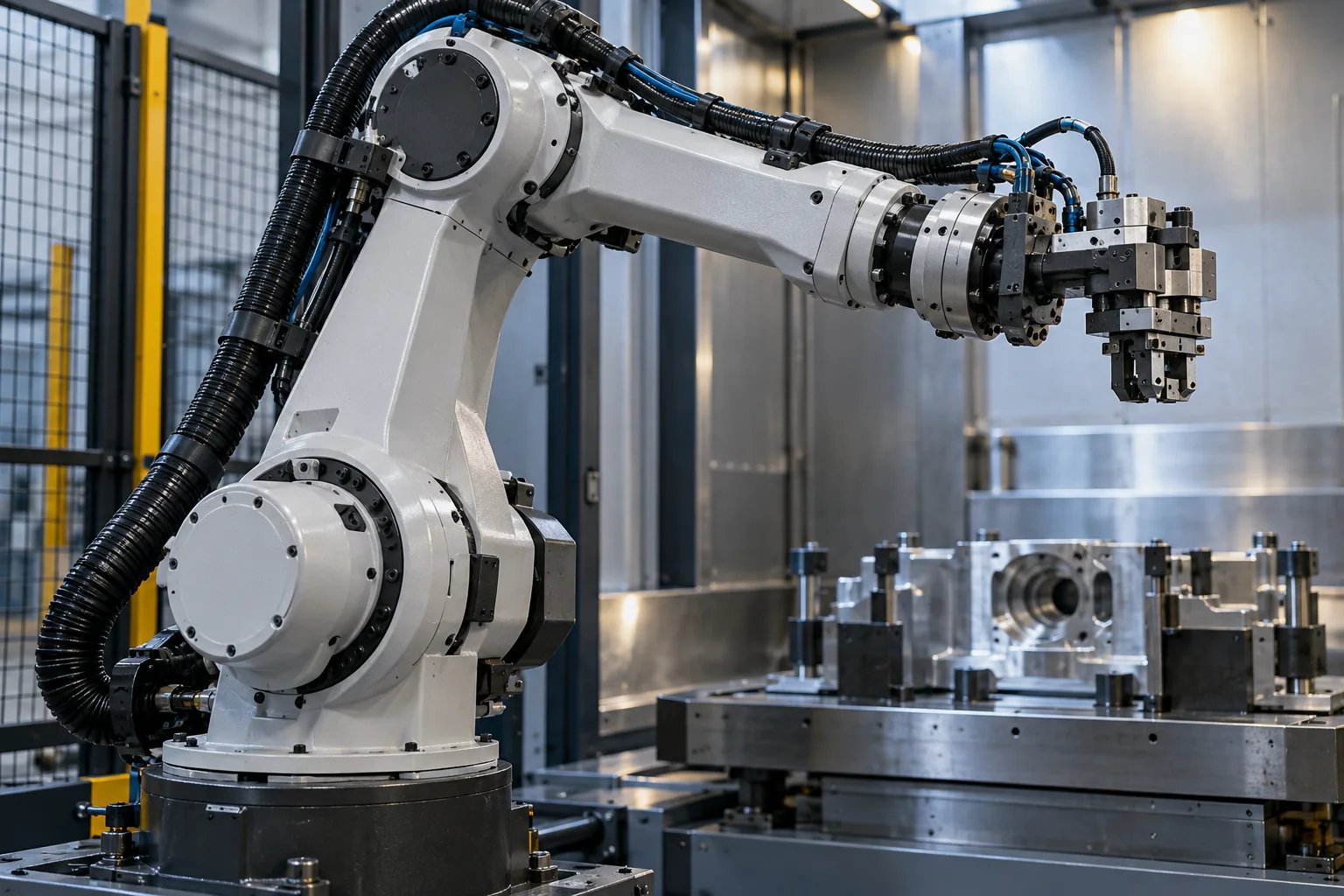
The practical question
How should a team investigate a robot-cell performance change?
Define the affected task and compare equivalent operating periods. Examine the relevant robot, tool, fixture and supporting-equipment records, preserving maintenance or configuration changes. Distinguish the observed performance change from its proposed cause, and let the responsible specialists determine the next assessment.
A performance change needs a precise question. Is the concern task duration, repeatability, positioning, recovery effort or an associated quality finding? Keeping that question tied to the actual work helps the team identify which observations are useful and which further assessment is needed.
Define the change before the diagnosis
NIST’s robot-workcell degradation research develops test methods, metrics and reference data to assess changes in the cell. A useful operating question therefore begins with the performance characteristic being examined. A general health label should not replace the evidence needed to understand a specific change.
Sources: [1]
Consider the positioning chain
NIST research examines how positioning errors can arise across the components linking moving objects, tools and devices in a workcell. A positioning concern should therefore be reviewed in the context of the complete arrangement, rather than being assigned to the robot arm without supporting evidence.
Sources: [2]
Include the end-effector’s task
NIST has developed benchmarking approaches for end-effector characteristics such as grasp performance, cycle time and repeatability. These are task-relevant characteristics of the tooling, distinct from a robot’s overall activity count. Use measurements whose meaning and scope fit the work being investigated.
Sources: [3]
An illustrative situation
Review a change without losing its context
Hypothetical example: a handling cell needs more recovery attempts after an equipment intervention. The team identifies the affected programme, tool, part presentation and recorded production periods. It asks whether the recovery count uses the same definition before and after the work and whether each attempt can be located.
The available evidence may support a tool-related question, a task-sequence question or a need for more precise measurement. Keep those possibilities separate from the technical conclusion. The maintenance and process specialists decide what examination or authorised follow-up is appropriate.
Retain what the team learned
When the review is complete, record the finding, supporting evidence and remaining uncertainty. Link the outcome to the initial concern and the relevant work history. A later improvement in the displayed metric should be interpreted with comparable task and measurement conditions, rather than being treated as proof that one intervention solved every issue.
For VIEOX, a practical starting point is one recurring cell-performance review that takes too much effort to assemble. Bring the records the team currently trusts and explain which connection is missing. A clearer operating picture can then be evaluated against that specific need, with the technical assessment retained by the responsible people.
Put the question to work
A practical checklist
- Define the task and performance characteristic under review.
- Preserve programme, tooling and relevant equipment-change context.
- Compare equivalent operating and measurement conditions.
- Keep observations, candidate explanations and confirmed findings distinct.
- Return the maintenance or engineering outcome to the original record.
Questions, answered
Can a performance trend diagnose a degraded component on its own?
Use the trend to frame a focused question and identify the relevant period. Component diagnosis needs the appropriate engineering evidence and interpretation. A clear review records which explanations remain possible and what further assessment could distinguish them.
What if several changes occurred in the same period?
Keep each change visible and avoid claiming that the comparison isolates one of them. The team may need a more suitable reference, additional records or a deliberately designed evaluation. The operating view should make that limitation easy to see.