


Industry overview
Data centers: connect digital demand with physical resilience.
An overview of data center types, electrical and cooling equipment, operating processes and industry challenges, and how OT supports the facility as a whole.
The practical question
What does OT contribute to a data center?
OT monitors and controls the physical systems that support computing. Connecting electrical, cooling and environmental records with equipment status, workload context and maintenance activity can help teams understand conditions and coordinate an appropriate response.
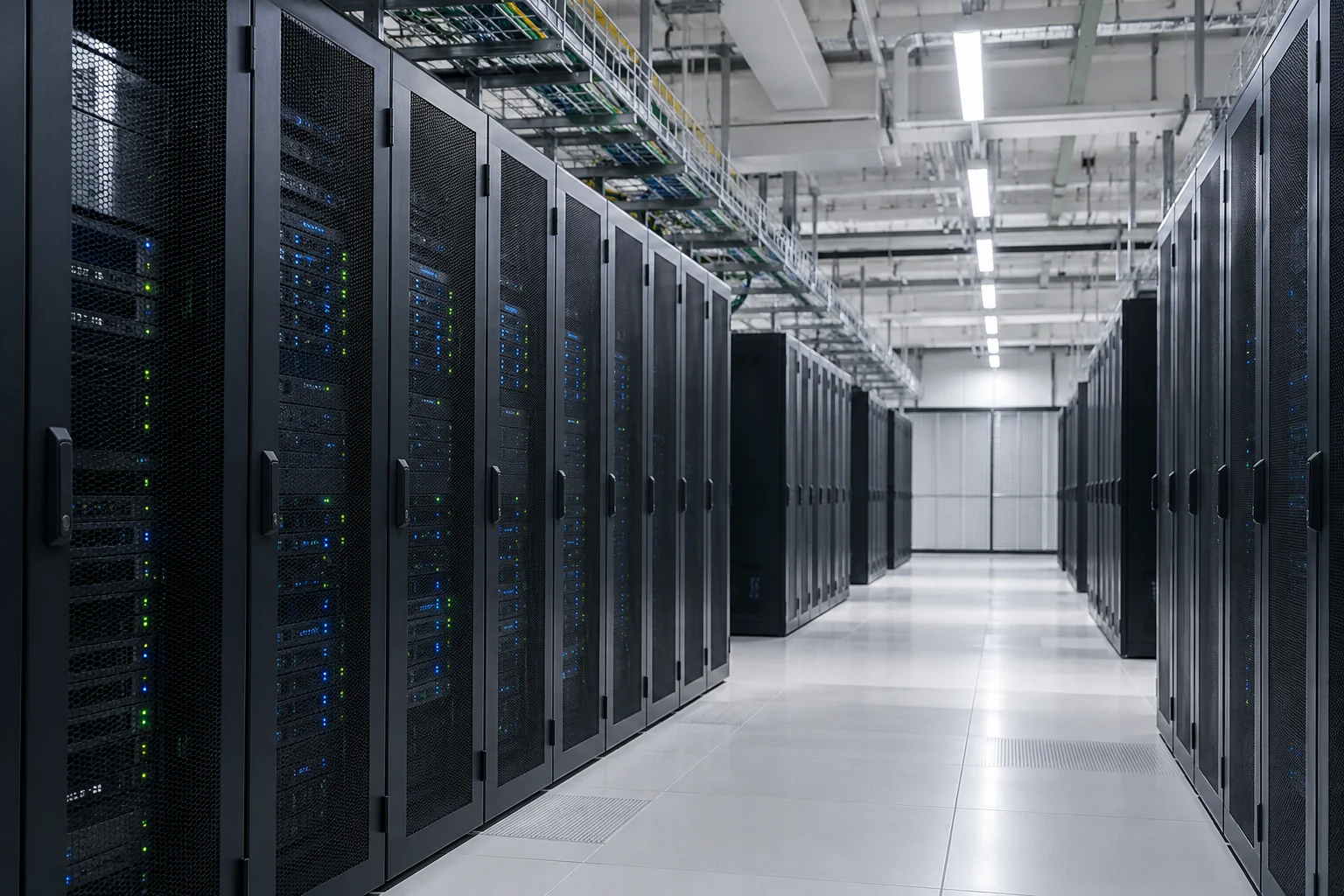
Data centers deliver digital services through physical infrastructure. Servers and networks depend on electrical power, cooling and coordinated facility operations. Understanding those dependencies helps teams discuss continuity, capacity and resource use in the same operating picture.
Different operating models share physical dependencies.
Data centers include enterprise facilities, colocation sites, cloud and hyperscale operations, and smaller edge locations closer to users or equipment. IBM’s overview distinguishes these models and the different divisions of responsibility between infrastructure providers and customers.
For an OT discussion, establish who owns the building systems, who operates the IT equipment and who approves changes. A whole-site view and a tenant’s view may cover different assets. The first useful boundary is therefore both physical and organisational: the equipment involved and the people able to act on its condition.
Sources: [1]
Electrical and cooling systems support the computing load.
The electrical path can include utility supplies, switchgear, uninterruptible power supplies, backup generation and distribution equipment serving IT racks. Cooling may involve air-handling units, chillers, pumps, heat rejection equipment or liquid cooling circuits, depending on the facility design. These systems support servers, storage and networking equipment.
The U.S. DOE design guide treats IT conditions, air management, cooling and electrical systems as related parts of facility efficiency. For a practical overview, map which power and cooling assets serve each area, where measurements are taken, and which systems share a dependency.
Sources: [2]
Operation is a continuing cycle of provision and review.
Computing work changes over time, while the facility supplies power and removes heat within its design and operating constraints. Daily work includes monitoring, inspection, maintenance, incident response and the controlled introduction of equipment or capacity changes. The relevant operating record should show what configuration was active during the period being reviewed.
Map that cycle from a capacity request or planned maintenance task through assessment, implementation and verification. Identify the information exchanged between IT, facilities and service teams. A change in one area should be understood by the people responsible for the connected assets before it becomes an unexplained event in another system.
Continuity, capacity and efficiency interact.
The major challenges include maintaining service through equipment problems, accommodating changing load, managing constrained power or cooling capacity, and understanding energy use. Australian government guidance recommends assessing where power is consumed and whether cooling capacity matches the IT load; it also highlights the effect of poor airflow.
A facility-wide average can hide a local question. Ask whether a temperature change belongs to a particular rack area, a workload shift or a maintenance condition. Compare efficiency figures over a defined boundary and operating period. A useful review should consider the service being supported as well as the resources consumed.
Sources: [3]
OT makes the physical dependencies easier to interpret.
Building and equipment controls already observe and regulate parts of the facility. A broader OT approach connects their measurements, operating states and event histories with the relevant asset and maintenance context. This can support a shared view of capacity, equipment condition and developing exceptions.
Define how an observation becomes an action: who checks the condition, who coordinates with other teams and who authorises a change. Preserve the distinction between monitoring and switching or control authority. Clear timestamps, known data quality and visible gaps help avoid treating an old or incomplete reading as the present state of the facility.
Start with one service area and its dependencies.
Choose a hall, room or group of racks and map its electrical and cooling support. Review the equipment status, measurements and maintenance records already available. Include IT and facilities colleagues so the physical boundary matches the service responsibilities.
Agree a useful first outcome, such as a clearer explanation of recurring alarms or a better-informed maintenance discussion. Evaluate whether the necessary context can be assembled reliably before expanding across the site. Data Center Insights provides deeper reading on power and cooling, and on operational continuity, while this overview keeps the connected facility in focus.
Put the question to work
A practical checklist
- Define the facility model and ownership boundaries.
- Map the power and cooling dependencies of one service area.
- Connect measurements with asset state and maintenance activity.
- Review continuity, capacity and resource use together.
- Assign investigation, coordination and change responsibilities.
Questions, answered
Does OT replace IT monitoring in a data center?
No. IT monitoring and facility monitoring describe connected aspects of the service. An agreed shared context helps teams relate computing activity to the physical infrastructure supporting it.
Does better monitoring guarantee uninterrupted service?
No. Monitoring supports awareness and decisions. Resilience also depends on facility design, maintained equipment, tested procedures and the actions of the responsible teams.