


Warehousing & Logistics · A VIEOX perspective
Read fleet equipment condition alongside its duty.
Understand vehicle, hoist, storage crane and conveyor equipment observations in operating and maintenance context.
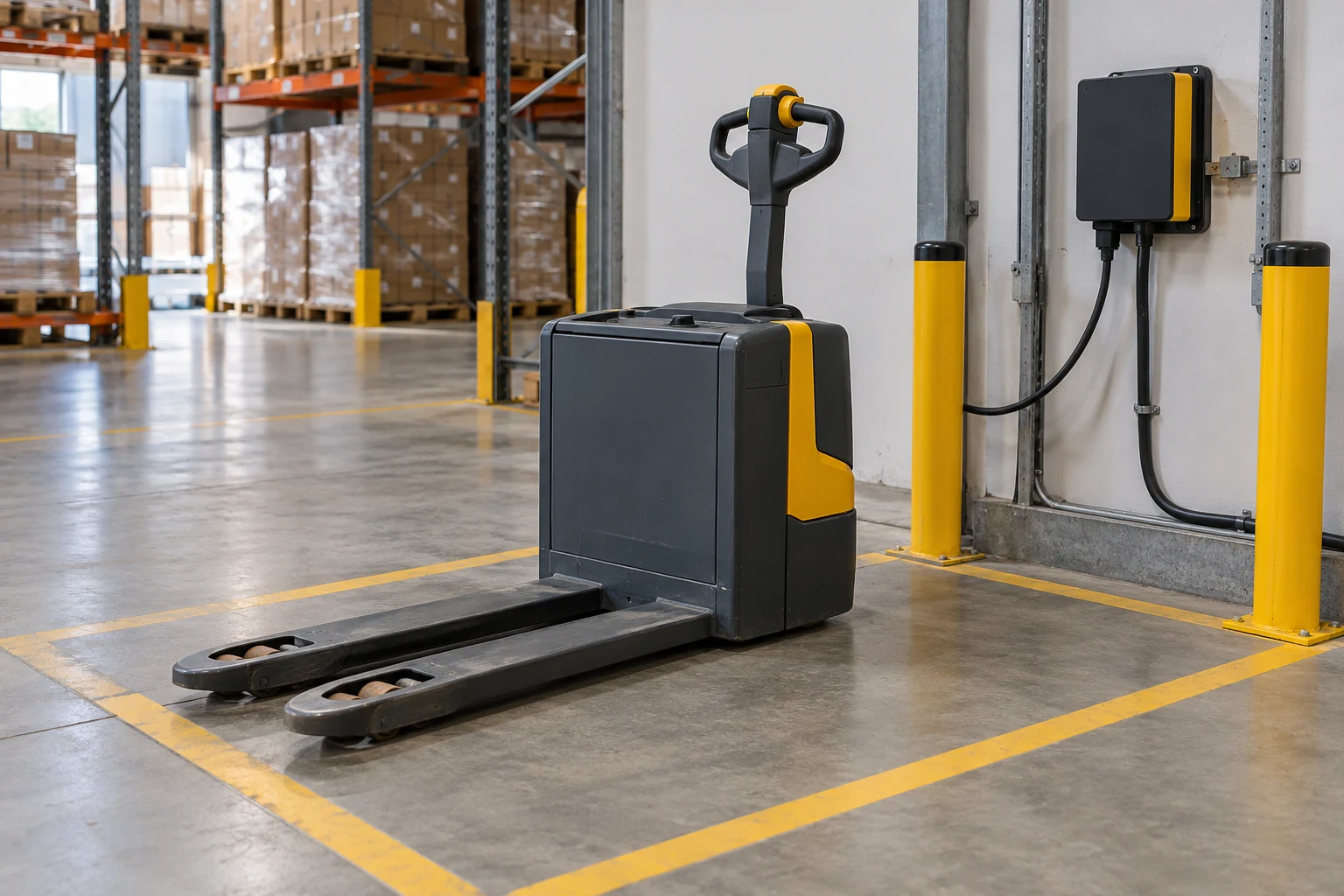
The practical question
How should a warehouse team prioritize a recurring vehicle or conveyor concern?
Compare like duty cycles, inspect recent service history and safety-related stops, and agree what a qualified maintainer should confirm next.
This guide considers one operating question in warehousing & logistics, connecting equipment observations to the work, the available context and the people responsible for the next decision.
Link the observation to the asset and its duty.
Lift cycles, runtime, payload, route and environment can affect how a handling asset behaves. A difference between two devices is not necessarily degradation without understanding their duties.
Begin with an equipment ID and the work it actually performed over a comparable period.
Explore the pattern of recurring interruptions.
Review whether repeated events share an operating mode, location, shift or recent maintenance change. Keep legitimate waiting and safety intervention separate from equipment faults.
Hypothetical example: a storage vehicle repeatedly delays near a charging area. The team considers traffic, queue and battery-work context before diagnosing an individual failure.
Do not reinterpret safety events as productivity waste.
Protective stops and traffic rules exist for reasons that require competent investigation. Analytics should not encourage bypassing guarding, aisle controls or maintenance procedures.
Site safety requirements remain binding regardless of any reported performance opportunity.
Sources: [1]
Make the next shift aware of unresolved condition questions.
A concise record includes location, active restriction, last verified status and owner of further checks.
For VIEOX, start by describing how the team currently brings device histories and maintenance notes together.
Put the question to work
A practical checklist
- Identify asset, handling duty and operating context.
- Separate safety stops from failure categories.
- Compare recent service and shift records.
- Assign inspection and handover ownership.
Questions, answered
Can equipment alerts alone forecast failure?
Not reliably. Evaluation needs appropriate operating context, evidence, and validation of the selected method.
Can we begin with one warehouse zone?
Yes. A narrow zone and defined question are usually better than a broad, unverified performance promise.