


Defence · A VIEOX perspective
Make supporting-equipment readiness easier to review.
Explore the information behind manufacturing and test-support facilities: service dependencies, equipment condition, maintenance findings and clear handovers.
The practical question
What does a useful supporting-facility equipment review need?
The equipment and service boundary, the area supported, a defined operating period, relevant measurements and work findings, and the current review status. Readiness should be assessed against the actual service requirements and authorised process, rather than inferred from a single indicator.
A workshop or test-support area depends on the services around it. A useful facilities review connects an equipment concern to the area it supports, the operating period and the work already undertaken, so the responsible team can assess what needs attention.
Define the service boundary.
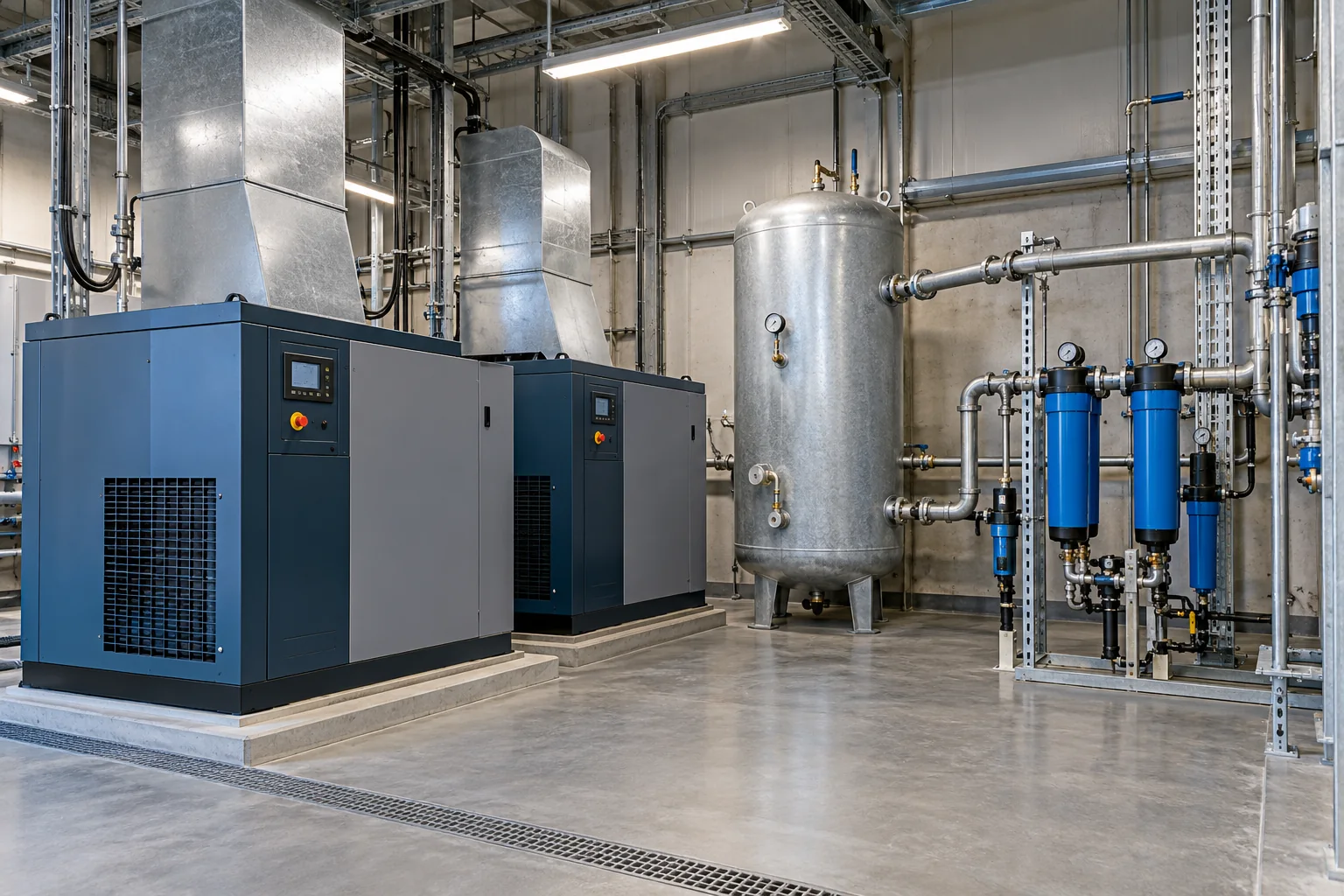
Choose the facility service relevant to the question: for example, cooling, ventilation, electrical supply or compressed air. Identify the equipment and the areas it supports using the site's own documentation. A shared service needs a different review scope from equipment dedicated to one workshop.
The Department of Energy's facility guidance links operations and maintenance with reliable use of energy and water systems. It also describes commissioning as verification against design intent and user needs. The practical starting point is therefore the required service, not just the presence of running equipment.
Ask what the people using the area need to understand. They may require a clear current status and a route for questions, while maintenance needs the detailed equipment history. Those information needs can be related without exposing unrelated programme detail.
Sources: [1]
Describe the observed condition clearly.
Record the observation, its equipment location and the period in which it occurred. A changed temperature, an unavailable service or a recurring work request should have a precise description. Keep a reported concern distinct from a confirmed diagnosis or a decision about readiness.
Check whether the record relates to the service as a whole or one component. If several areas depend on the same equipment, show which relationship is established by the available information. This helps prevent a local observation from becoming an unsupported statement about an entire facility.
Use evidence suitable for the question.
Bring the relevant operating records, inspection findings and service requirements into the review. Note changes in equipment, measurement location or recording method. A fair comparison should explain why the selected periods are relevant and which differences remain.
NIST's metrological guidance explains that a traceable result still needs to be suitable for its intended measurement purpose.
Ask the responsible specialist to establish what the reading can support. A trend may identify a period worth examining without being sufficient evidence for a readiness decision. Keep the supporting detail available to the reviewer who has that responsibility.
Sources: [2]
An illustrative situation
A cooling-service question before planned work.
Hypothetical example: a test-support area is preparing for scheduled work and raises a question about a cooling service. The latest equipment summary shows the pump running, while a maintenance note records an unresolved concern from an earlier period.
The facilities team identifies the service boundary, locates the relevant operating history and checks what the maintenance note actually established. It then reviews the evidence against the area's documented service needs through the responsible personnel. The running indication alone is not treated as proof that those needs are met.
The record carries the current assessment status and the team responsible for the next update. The example illustrates a clear review journey; it does not prescribe operating conditions or establish whether the service is ready for a particular test.
Carry the work status forward accurately.
Distinguish an observation awaiting review, a scheduled task, work completed and an accepted assessment. If a question moves between facilities, maintenance and the team using the area, preserve who owns the next step and what information is still needed.
Keep the summary current without erasing the history. An incoming colleague should be able to understand what changed since the last review and where the supporting record can be found. Use equipment references and language shared by the teams, and resolve ambiguity through conversation.
When an external service provider contributes findings, identify their equipment scope and date. The site can then relate those findings to its own records through the appropriate review and access arrangements.
Begin with one recurring service question.
A useful first assessment could concern a utility issue that repeatedly delays preparation, an equipment history that is hard to reconcile, or a maintenance concern that loses clarity between shifts. Identify which part of the information journey currently requires the most effort.
VIEOX would welcome a conversation about that defined need. Start with the service, the intended users and what a clearer record would help them understand. Together we can explore the appropriate scope of information and the requirements a proposed assessment must meet, with responsibility for facility readiness remaining clear.
Put the question to work
A practical checklist
- Name the equipment, service and area being supported.
- Define the observation and the period it concerns.
- Bring the documented service need and relevant work findings.
- Separate running status, work completion and readiness assessment.
- Identify the responsible team and the route for the next update.
Questions, answered
Does a running indication prove the supporting service is ready?
It establishes only the state represented by that indication. The responsible team should assess the service against its actual requirements using the appropriate operating, inspection and maintenance evidence.
Can facilities information be discussed separately from programme detail?
A useful initial discussion can focus on the equipment service and information problem. The organisation should determine which detail is needed and the appropriate access and exchange arrangements before records are shared.