


Industry overview
Shipping and ports: connect vessel operations with cargo flow.
Explore shipping and port segments, machinery, cargo-handling processes and industry challenges, and how OT supports their connected operations.
The practical question
How can OT support the wider shipping and port operation?
It can connect machinery condition, equipment activity and operating events with the vessel, cargo movement and work stage involved. Shared context helps authorised teams coordinate maintenance and flow while keeping shipboard and terminal responsibilities clear.
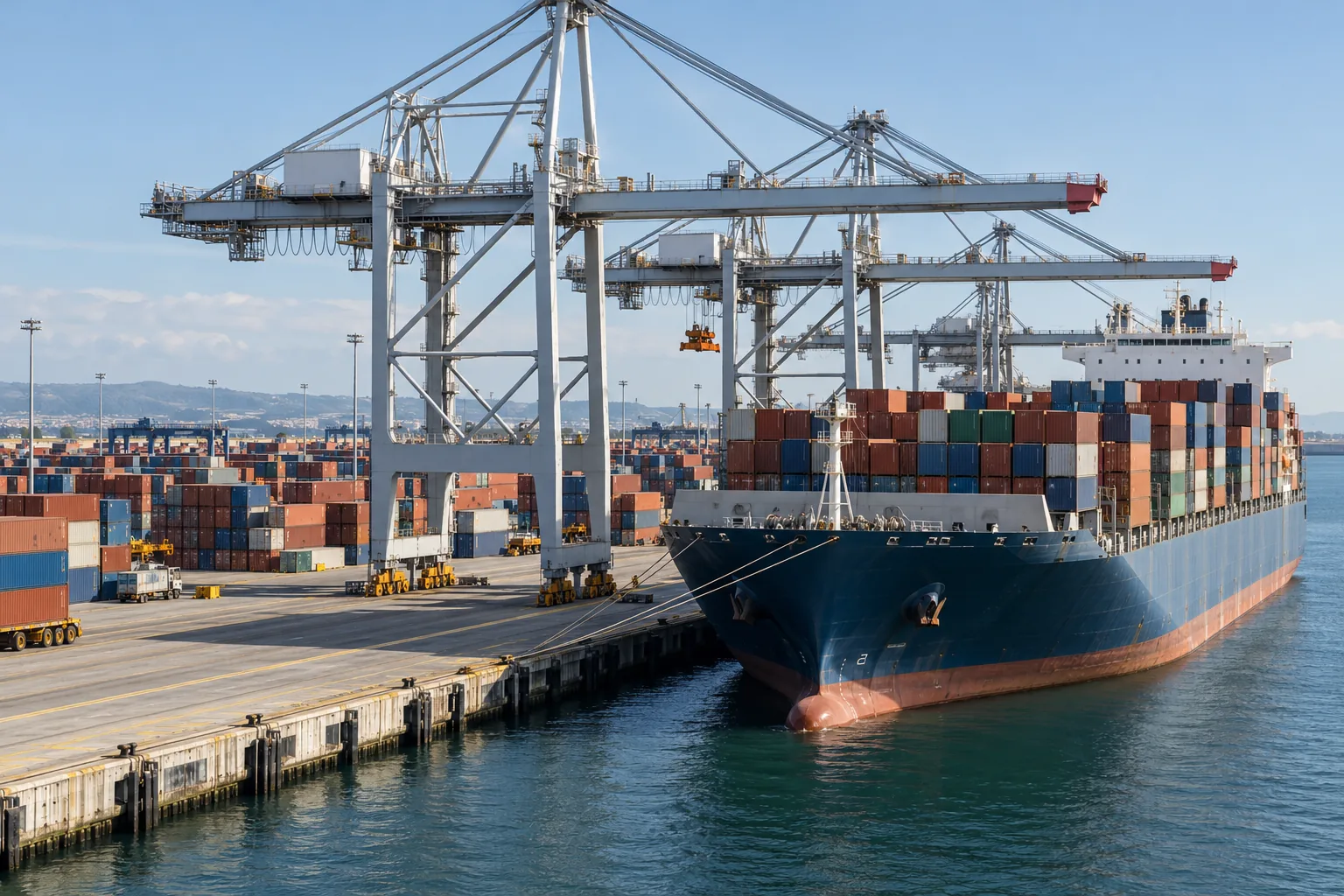
Shipping and ports connect journeys at sea with the physical work of moving cargo ashore and onward. Ships, terminals and transport operators have distinct responsibilities, yet their equipment and schedules meet at shared handoffs where delays and uncertainty can spread.
Different cargoes create different operating environments.
The sector includes container shipping, dry and liquid bulk, general cargo, vehicle transport and passenger services, together with their supporting port operations. Terminals specialise in the cargo they receive. The Port of Rotterdam describes container, dry bulk, liquid bulk, breakbulk and LNG facilities linked to sea, road, rail and inland waterways.
For an operating overview, separate the vessel, berth, terminal storage area and onward transport connection. Then identify their handoffs. A ship operator, terminal operator and transport provider may all be discussing the same delay while seeing only the equipment and records within their own boundary.
Sources: [1]
Machinery spans propulsion, services and cargo handling.
A ship’s industrial systems can include propulsion machinery, electrical generation, pumps, cooling circuits and cargo-handling equipment. On shore, the equipment depends on terminal type: cranes and handling vehicles for containers, conveyors for some bulk cargoes, or pumps and transfer systems for liquids.
IMO’s GreenVoyage2050 material considers main and auxiliary machinery, energy-consuming equipment and operational measures together. Use that breadth to build a local equipment map: what moves the vessel, what supports its services, what transfers the cargo and what enables the onward journey. The map should show dependencies without assuming every asset belongs to one operator.
Sources: [2]
Follow the journey through arrival, transfer and departure.
A representative port call connects arrival planning, berth preparation, cargo transfer and departure. Within the terminal, cargo may move through temporary storage and checks before onward transport. The exact route depends on cargo type and local arrangements; a liquid transfer and a container move should not be treated as the same process.
Map the physical stages and the information passed at each handoff. Distinguish equipment ready to work, cargo ready to move and a transport connection ready to receive it. These are separate conditions, and recording them separately helps explain why available machinery may still be waiting.
Reliability, coordination and resource use meet at the handoffs.
The industry must coordinate equipment availability with changing vessel and cargo schedules, weather conditions and work across several organisations. Machinery interruptions can affect a transfer window, while congestion can leave otherwise available equipment waiting. Fuel and energy questions also depend on how a vessel or terminal is operating.
Ports bring substantial physical risks around lifting, vehicle movements, freight containers and work at height, as highlighted by HSE. Treat operational visibility as support for established safe work. A flow improvement needs to make sense for the people carrying out the operation and the responsibilities already governing it.
OT connects local measurements with the operating situation.
Operational technology monitors and controls physical machinery and equipment. Linking states, measurements and event histories to a vessel, terminal area, cargo task and operating period can support a more coherent view of machinery condition and work progress.
Consider maintenance, cargo flow and energy use together, while retaining clear ownership. Agree which information can be shared across ship and shore, how its freshness is shown and who responds to an exception. Preserve local control and safe operating authority. A shared record should help people coordinate an investigation without implying that one organisation can command another’s equipment.
Begin with one handoff that matters to the operation.
Choose a bounded question such as a recurring equipment interruption during cargo handling or a machinery history that is difficult to carry between watches. Map the assets, operating stages and teams involved, and review the records already available on both sides of the handoff.
Define the decision a clearer account would support, then assess the necessary context, access and responsibilities. This keeps the first scope practical while recognising its place in the larger journey. Shipping and Ports Insights provides more focused reading on ship machinery and maintenance, and on port equipment and operational flow.
Put the question to work
A practical checklist
- Identify the cargo type and vessel or terminal boundary.
- Map machinery, cargo equipment and shared dependencies.
- Separate equipment readiness from cargo and transport readiness.
- Connect operating events across relevant watches and handoffs.
- Agree information sharing and local response responsibilities.
Questions, answered
Do ship and terminal systems need a single owner?
No. A useful operating view can connect selected information across agreed boundaries. Each operator retains responsibility for its own equipment, permissions and operating decisions.
Is there one equipment model for every port?
No. Container, bulk, liquid, vehicle and passenger operations have different assets and workflows. Start with the actual cargo journey and its physical handoffs.