


Industry overview
Connect generation, network assets and reliable service.
Explore power generation, transmission and distribution, the equipment and processes behind supply, and how OT addresses reliability, coordination and asset challenges.
The practical question
Where does OT help the power industry most?
In connecting asset condition, operating state and system demand with the teams responsible for reliable service. Monitoring and control provide the physical view; clear event histories, maintenance context and responsibility make that view useful across plant and network boundaries.
Electricity supports industrial production, public services and everyday life. The industry connects generation with transmission, distribution and increasingly distributed resources. Operational technology brings equipment measurements, control and operating context together so that plant and network teams can understand their part in the wider supply system.
One service, several operating landscapes.
Generation includes thermal, nuclear, hydro, wind and solar facilities. Transmission carries bulk electricity across the network, while distribution connects it with users. Storage, local generation and industrial captive power add further operating arrangements. Equipment, timescales and responsibilities differ across these segments.
A thermal generating unit, wind farm and distribution substation cannot be understood through identical equipment indicators. A broad industry view starts with the service each provides, its connection to other assets and the team that owns the operating decision.
From energy conversion to delivery.
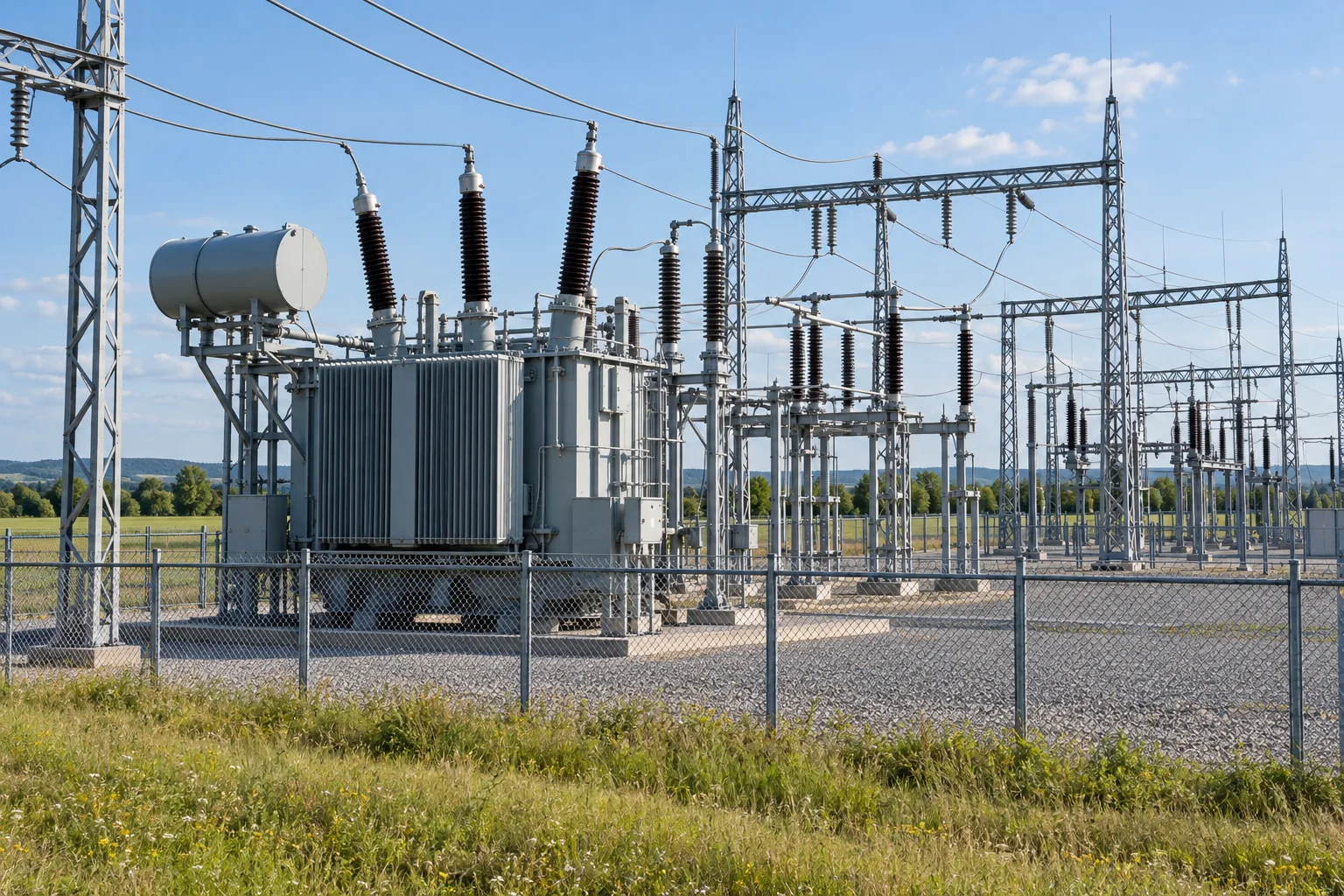
Many plants drive generators with turbines; solar photovoltaic systems convert sunlight into electrical energy. Transformers change voltage between network stages, while lines and cables carry power. Substations include switching and protection equipment that supports the network arrangement and the management of faults.
The operating process includes scheduling and balancing supply, observing equipment state, coordinating planned work and restoring service after interruptions. Each stage depends on information from the others. A plant availability figure, for example, needs to remain distinguishable from what the network has requested or can receive.
Reliability includes the equipment around the main asset.
Power facilities also rely on supporting services such as cooling, lubrication, station power and communications. Their significance depends on the generation or network technology. A reliable main machine offers limited value if a supporting service prevents the wider facility from fulfilling its role.
The broad challenge is to understand dependencies while managing maintenance, ageing equipment and changing duty. Organise the operating picture around a generating unit, substation or service area, and make those dependencies visible to the teams reviewing availability. A single headline measure should lead to the relevant asset context.
Changing demand makes a shared view essential.
Electricity use varies with time and weather, so operators coordinate available supply and demand. Distributed resources and variable generation add more locations and conditions to understand. Network events can also involve several organisations, making consistent time references and clear boundaries important when reconstructing what happened.
The DOE Grid Modernization Laboratory Consortium describes sensing and measurement as foundations for understanding system health and responding to events. Better visibility can support planning and operational review, provided teams know which observations are direct, estimated, delayed or unavailable.
Use OT across the plant and network lifecycle.
OT combines field measurements, equipment controls, supervisory monitoring and historical records. Linking these with maintenance work, operating schedules and local observations can help teams investigate interruptions, prioritise asset attention and understand the effect of changing duty. The objective is dependable service with a clearer basis for decisions.
Cybersecurity, communication resilience and access ownership are part of that operating design. Protection and authorised control keep their defined roles. A new information layer should explain uncertainty and preserve the distinctions between an equipment observation, a maintenance recommendation and permission to change system operation.
Begin with a service outcome people recognise.
Choose a recurring issue such as an auxiliary interruption, an unclear asset history or a difficult event review between plant and network teams. Establish which people need a clearer account and which records describe the same equipment and period. Include normal operation as well as the event itself.
Agree the intended benefit before extending connectivity: more useful maintenance reviews, clearer availability reporting or less time reconstructing an incident. VIEOX can explore an appropriate ConverEDGE scope around that need. Power Insights alongside this page provide deeper perspectives on generation equipment and transmission assets.
Put the question to work
A practical checklist
- Identify the generation, network or distributed-resource context.
- Map the asset and its supporting services.
- Connect event timing with the actual operating state.
- Include plant, network and maintenance responsibilities.
- Assess the benefit against a defined service question.
Questions, answered
Is power-sector OT only about generation plants?
No. Substations, transmission and distribution assets, storage and local generation also use monitoring and control. The useful information and responsible teams depend on the service and network boundary being considered.
Does connecting records replace network protection or operating procedures?
No. It can improve the evidence available for review and coordination. Protection, switching authority and operating instructions continue through their established engineering and organisational arrangements.